Symptoms
Why one person reacts to mold when another feels fine
MoldCo Editorial Team
The short answer
Contents
"my partner doesn't believe mold can make you sick and he feels completely fine." That household mismatch can happen. Two people in one home may have different exposures or responses. But the mismatch isn't diagnostic: it can't prove mold caused one person's symptoms, and it can't make the person who feels fine a medical control.
A household isn't a clinical trial. The person who feels fine isn't the control group for your body.
The useful move is to keep the difference as evidence, then resist asking it to settle the case. Separate what happened in the building from what happened in your health. Only then can an inspection, a clinician, or a test answer a defined question.
The same building can mean different exposure
An address tells you where people live. It doesn't tell you exactly what each person encountered.
Damp-building exposures are complex and can vary among buildings and across locations within the same building. People at the same address may spend their time in different places. Their tasks and presence during a water event or cleanup can differ too. Prior homes, schools, and workplaces belong in each person's exposure history.
Health effects depend on the mold, the amount and duration of exposure, and the person exposed, according to the National Institute of Environmental Health Sciences. NIOSH also notes that researchers don't know a single exposure level that predicts who will develop a health problem. The household comparison can't supply the missing personal dose.
Keep the building question concrete: water intrusion, persistent dampness, visible growth, affected materials, and changes over time. A qualified, independent environmental professional can investigate those facts without turning them into a medical conclusion. MoldCo's mold inspection and detection guide can help you understand the job before choosing who should do it.
Different bodies can respond differently
Mold allergy can make people in the same place react differently. A sensitized immune system recognizes a particular substance as an allergen. In mold allergy, the immune system reacts to specific mold spores, which is why some people develop an allergic response while others exposed in the same setting don't. The American Academy of Allergy, Asthma & Immunology explains this distinction and why symptoms alone can resemble other conditions. Our guide to mold allergy versus mold illness goes deeper into that fork in the road.
Existing respiratory health can change the response as well. People with asthma, allergies, or other lung conditions may be more sensitive to mold, and mold exposure can trigger asthma attacks or irritation, according to CDC clinical guidance. Immune status can also change the level and type of clinical concern. These are established differences a clinician can evaluate. They don't require a genetic story to become plausible.
Damp indoor spaces are associated with respiratory and allergic problems, including new or worsening asthma. One person feeling fine doesn't cancel that evidence. One person feeling ill doesn't make mold the only explanation.
"Sensitivity" is a starting word, not one diagnosis
People often use mold sensitivity to describe feeling worse around a damp or suspect place. Until a clinician defines the category, sensitivity describes an experience, not a diagnosis.
Allergy is one category. Irritation is another, and mold can irritate the eyes, nose, throat, skin, or lungs even without an allergy. Asthma is a disease of the airways that may worsen around triggers. NIOSH separates these health questions because they aren't interchangeable.
Hypersensitivity pneumonitis has an especially confusing name. It's a distinct immune-mediated lung disease, not a medical synonym for feeling "hypersensitive" to a building. Its diagnosis has a dedicated American Thoracic Society clinical guideline.
This is why a symptom list can't do all the work. Many symptoms have several possible causes, and the pattern needs medical context. If you're trying to place what you've noticed into the right category, begin with a careful overview of mold exposure symptoms and their limits, then bring the history to a qualified clinician.
That distinction still applies when genetics enters the discussion. If sensitivity is a description rather than a diagnosis, a genetic result can't turn it into one.
Where HLA and CIRS stop
HLA-DR/DQ names immune-system genes involved in presenting antigens. The Shoemaker framework proposes certain HLA-DR/DQ patterns as susceptibility factors for Chronic Inflammatory Response Syndrome (CIRS), a contested framework for illness attributed to water-damaged buildings. A narrow HLA-allergen association study doesn't validate a broad predictive test for generalized mold sensitivity.
Current AAAAI guidance recognizes the established health effects of damp indoor spaces. It says the evidence is insufficient to connect broad, nonspecific symptom complexes to what is often called toxic mold syndrome or CIRS. That guidance doesn't make an HLA result a diagnosis or a causal answer. The result can't diagnose CIRS, prove exposure or causation, rank severity, predict whether symptoms will last, or select treatment.
Keep two records before you choose a test
The household mismatch has now done its useful work: it has shown you what needs to be recorded, not what caused it. Keep two records because the building and your health pose different questions.
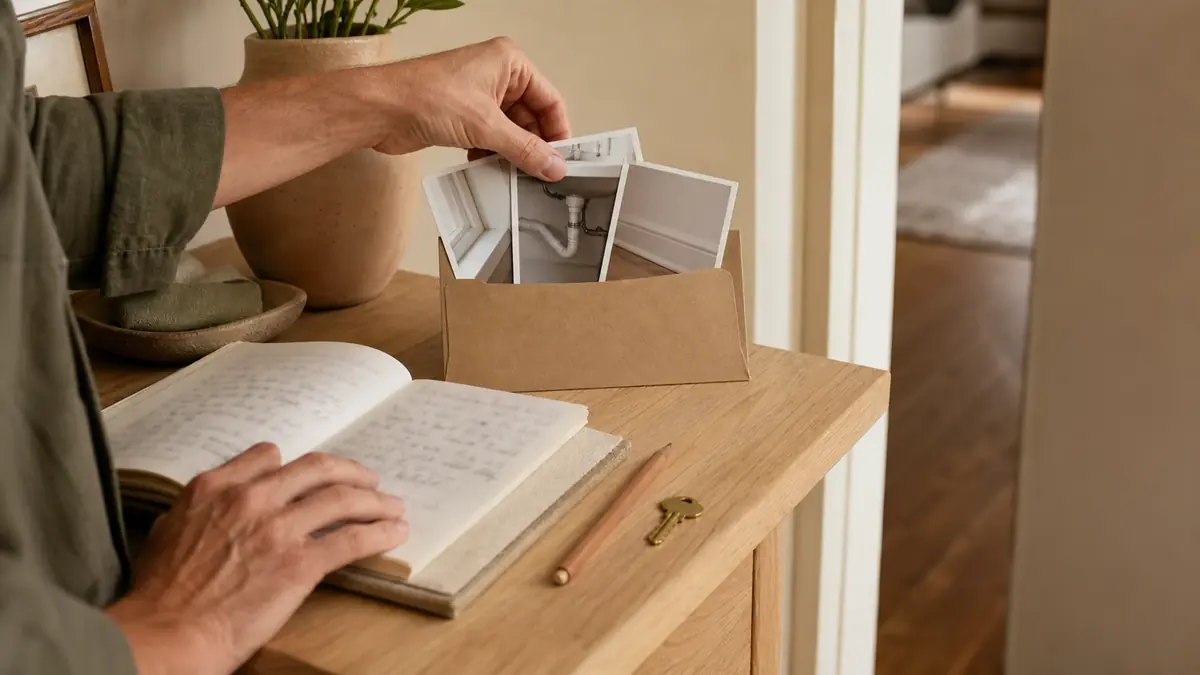
Building history: Record water events, persistent dampness, visible or reported damage, affected areas, dates, time spent in those areas, and what an owner or environmental professional found. This record organizes what happened in the building. It doesn't carry a medical conclusion.
Health history: Record when symptoms began and how they changed across times and places. Add existing allergies or lung conditions, then note infections and medications. Keep objective test results with clinician assessments. Changes by location and time are useful clinical context, not proof of the agent or cause. Non-mold explanations must remain open because conditions unrelated to the building may resemble or coexist with a location-linked pattern.
Name the job before ordering the test. A building inspection investigates moisture and damage. A medical evaluation asks what health category fits. A genetic result describes inherited variation, not whether a building exposed you or why you feel ill today. The blood tests versus environmental tests guide can help keep those jobs from bleeding into each other.
An allergist may fit an allergy-shaped question; primary care or a lung specialist may fit respiratory concerns or symptoms with several possible causes. An independent environmental professional fits the building question. The right next step follows the question you can actually name.
If you want one place to organize what you've noticed, use MoldCo's symptom questionnaire after you've kept the building and health records separate. It isn't a diagnosis and can't establish that mold caused your symptoms.
Medical disclaimer
Any health-related claims made on this site have not been evaluated by the Food and Drug Administration (FDA). The information provided on this site is not intended as a substitute for professional medical advice, diagnosis, or treatment. Always seek the advice of your physician or other qualified health provider with any questions you may have regarding a medical condition. MoldCo assumes no responsibility or liability for any errors or omissions in the content of the references, nor for any actions taken in reliance thereon.
About the author

MoldCo Editorial Team
Editorial Team
The MoldCo Editorial Team maintains MoldCo's public education library. The team works from MoldCo's product, clinical, and environmental review standards to keep content clear, sourced, and within appropriate medical and remediation boundaries.
Your next step
Not sure whether mold is part of your picture?
The first step is an intake that maps your symptoms and history. You get clarity first, then decide whether provider-guided care fits.
This article is informational and is not medical advice. MoldCo treats but does not diagnose CIRS.