Care and Treatment
Mold Doctors in NYC: Why You Can't Find One (and What to Do Instead)
MoldCo Editorial Team

The short answer
Contents
- What mold toxicity treatment actually looks like
- Why there are no mold illness specialists in NYC
- How telehealth changes the equation
- What MoldCo offers NYC residents
- Common questions about mold illness treatment in NYC
- Is MoldCo available in New York City?
- Are there any mold illness doctors in New York City?
- How much does mold illness treatment cost in NYC?
- Can treatment start while I'm still living in a moldy apartment?
- What should I do if my landlord won't fix the mold?
New York City has more physicians per capita than almost any city on the planet. Over 80,000 doctors serve 8.2 million people. You can find a cardiologist, a neurosurgeon, a sports-medicine specialist for your dog. But if mold is making you sick, you won't find a single local physician trained to treat it.
That's not an exaggeration. The Surviving Mold physician directory lists zero Shoemaker Certified physicians in New York City. The one practitioner physically located in the city specializes in energy work and patient support, not medicine. The closest certified MD is roughly 60 miles away in New Jersey.
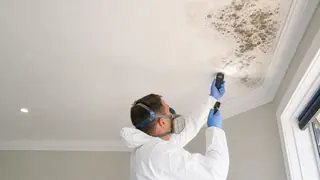
Meanwhile, New Yorkers filed 36,178 mold complaints in 2024, a 59% increase from the year before. Pre-war buildings on the Upper West Side hide mold behind a century of layered tile. NYCHA's 77,000 open work orders sit unresolved at a 9% on-time completion rate. Post-Sandy water damage still lingers in Red Hook basements.
The buildings are the problem. But so is the gap between exposure and care. If you think your home is making you sick, start with the free mold risk assessment. It takes 5 minutes and helps you figure out if mold is likely a factor. From there, you can order a HERTSMI-2 home test ($199, shipped to any New York address) or talk to a MoldCo provider ($129, fully refundable).
"Exposed to high levels of toxic mold for months in a rental home. Brain fog, fatigue, sick more often, working memory clobbered. Treatment with MoldCo has been a huge blessing, finally recovering. If not for them mold wouldn't even be on my radar as a potential cause. Most doctors aren't trained to diagnose it." MoldCo patient
What mold toxicity treatment actually looks like
Many people searching for a mold doctor don't know what treatment involves. That's understandable. Your primary care physician doesn't cover it.
Mold toxicity treatment guided by the Shoemaker Protocol follows a sequenced approach across three phases:
Detox. A prescription binder called colesevelam (used off-label for biotoxin binding) attaches to toxins recirculating through the GI tract and removes them. Research suggests binder therapy can produce significant recovery within weeks (Shoemaker & House, 2006).
Clear. An EDTA-based nasal spray protocol addresses the possible presence of suspected MARCoNS, bacterial biofilms that can keep inflammation going long after you've left the moldy environment.
Repair. VIP nasal spray (off-label) works on a case-by-case basis to restore neuroimmune balance. Published data suggests significant symptom score reductions in the repair phase (Shoemaker et al., 2013).
The full protocol typically takes 6 to 12 months. And here's something most people don't realize: treatment can begin while you're still living in the exposure. Binder therapy and treatment run on a parallel track with remediation, not a sequential one.
The stakes aren't abstract. Columbia's Mailman School of Public Health found that NYCHA's Mold Busters program was linked to 2,798 fewer asthma ER visits per year. That's what happens when you fix the building. But what about the person already exposed? Imaging studies have documented brain changes from chronic mold exposure (McMahon et al., 2016), including reduction in cortical grey matter. Mold inhalation can trigger immune activation and neurocognitive dysfunction that persists after the source is gone.
For a full breakdown of the protocol, read our mold toxicity treatment guide.
Why there are no mold illness specialists in NYC
The specialist shortage isn't unique to New York. A small number of practitioners nationwide are formally trained in the Shoemaker Protocol. But the contrast here is sharper than anywhere.
NYC is the medical capital of the world. Memorial Sloan Kettering. NYU Langone. Mount Sinai. Columbia. You can get almost any form of specialized care within a subway ride. But mold toxicity doesn't exist in the conventional medical curriculum. So 8.2 million people live within a healthcare system that has no framework for what's happening to them.
When people post online about searching for help, the pattern repeats. As one person put it on r/ToxicMoldExposure: "most doctors are going to say your condition is idiopathic condition or their favorite word anxiety."
Most functional medicine practitioners now recognize mold illness, but few have completed formal Shoemaker Protocol training. Some often charge $300 to $600+ for an initial consultation, and first-year costs may exceed $5,000 to $10,000. Even when they do treat mold illness, they may not follow the Shoemaker Protocol specifically. Many have waitlists stretching months out.
That's the double bind for New Yorkers: the city's buildings produce mold at industrial scale, and its healthcare system isn't equipped to treat the people those buildings make sick.
"My life would likely have been quite different the past 8 years had MoldCo been around when I found mold in my house in 2017. It's been a journey even talking publicly about mold illness since it sounds like quackery. Getting help has been even harder. Most doctors downplay the impact of mold." MoldCo patient
How telehealth changes the equation
Here's the thing about mold toxicity treatment: it doesn't actually require an in-person visit for most of the care. Treatment is guided by exposure history and symptoms, with lab results and clinical interpretation supporting the plan. All of that works through a screen.
A 2022 systematic review published in the Journal of Medical Internet Research found no significant differences in clinical outcomes between telehealth and in-person care for chronic condition management (Lewinski et al.). That's not a minor finding. It means the barrier between you and treatment isn't just where the specialist sits. It's whether MoldCo is licensed in your state at the time of your visit.
There's one New York-specific limitation worth knowing. Due to state laws, blood panels can't be ordered within New York. Based on your assessment, you may not need blood work to start working with MoldCo. The HERTSMI-2 home test ships directly to your home with no restrictions. For full details on what's available in your state, see our availability page.
Guided by the same protocol. Clinicians work within Dr. Shoemaker's framework. No waiting room. No six-month waitlist.
"Getting help was fast and easy. I was able to get tested and talked to a doctor within one week. It was excellent. I now feel like I am on the path to healing. So grateful for moldco." MoldCo patient
What MoldCo offers NYC residents
If you're trying to figure out your next step, here's how to think about it.
Not sure if mold is the cause? Start with the free mold risk assessment. It takes 5 minutes and helps you figure out whether your symptoms are consistent with mold-related illness. No commitment, no payment.
Think your home has mold? Try the HERTSMI-2 home test ($199). It analyzes DNA from five mold species most commonly found in water-damaged buildings. Scores below 11 are considered safer for people with mold susceptibility. Scores above 11 indicate a potential problem. It ships to any New York address.
Think you're sick from mold? Start with a $129 MoldCo provider consultation. You'll talk to a clinician who works within Dr. Shoemaker's framework, get a clear assessment, and build a treatment plan. If it's not a fit, you get a 100% refund. Prescriptions ship to your door ($59 to $219/month). Ongoing care runs $79/month.
Compare that to the alternative: an initial visit with a functional medicine provider that may run several hundred dollars, often a long waitlist, and care that can potentially cost thousands of dollars in the first year alone, without clear confirmation that the provider follows the protocol you need.
NYC's average mold remediation cost runs $2,541 ($1,314 to $3,783). That fixes the building. Treatment fixes you. Both matter. Both can happen at the same time.
For step-by-step guidance from testing through treatment, see our recovery guide.
"MoldCo gave me my life back. I struggled for years with chronic symptoms that other doctors wanted to give me band-aid solutions for, but with MoldCo, I actually got to the root cause. I've gone from being bedridden to feeling the best I ever have within a few years, and I owe the majority of my progress to MoldCo's protocol. I'm so glad that I trusted my gut to dig deeper into what was going on." MoldCo patient
Common questions about mold illness treatment in NYC
Is MoldCo available in New York City?
Yes. MoldCo provides telehealth mold toxicity care to all NYC residents. Due to state laws, blood panels can't be drawn within New York, but based on your assessment, you may not need blood work to start. The HERTSMI-2 home test ($199) ships anywhere in the state, and prescriptions are delivered to your door. Check your eligibility.
Are there any mold illness doctors in New York City?
The Surviving Mold directory lists zero Shoemaker Certified physicians in NYC. The closest certified MD is approximately 60 miles away in New Jersey. This is why telehealth has become the primary access point for mold toxicity treatment in the New York metro area.
How much does mold illness treatment cost in NYC?
Some functional medicine practitioners who address mold illness may charge $300 to $600+ for an initial visit, and first-year totals can reach $5,000 to $10,000+. MoldCo's initial consultation is $129 (with a 100% refund if not a fit), and ongoing care is $79/month. The HERTSMI-2 home test is $199. If you're not sure whether mold is the cause, start with the free mold risk assessment. It takes 5 minutes. See our full pricing page for details.
Can treatment start while I'm still living in a moldy apartment?
Yes. Binder therapy (colesevelam) can begin while you're still in the exposure. Remediation and treatment don't have to happen sequentially. Many of our patients start treatment before they've been able to move or complete remediation. Read more in our treatment guide.
What should I do if my landlord won't fix the mold?
New York City's Local Law 55 requires buildings with 3+ units to be inspected annually and requires landlords to keep their tenants' apartments free of mold. If your landlord isn't complying, file a complaint with HPD through 311 (online or by phone). You have legal protections including rent withholding, repair-and-deduct, and HP proceedings in housing court. But don't wait on your landlord to start addressing your health. Mold testing and treatment can begin in parallel with any legal process. Learn more about mold exposure symptoms and your options.
Any health-related claims made on this site have not been evaluated by the Food and Drug Administration (FDA). The information provided on this site is not intended as a substitute for professional medical advice, diagnosis, or treatment. Always seek the advice of your physician or other qualified health provider with any questions you may have regarding a medical condition. MoldCo assumes no responsibility or liability for any errors or omissions in the content of the references, nor for any actions taken in reliance thereon.
About the author

MoldCo Editorial Team
Editorial Team
The MoldCo Editorial Team maintains MoldCo's public education library. The team works from MoldCo's product, clinical, and environmental review standards to keep content clear, sourced, and within appropriate medical and remediation boundaries.
Your next step
Not sure whether mold is part of your picture?
The first step is an intake that maps your symptoms and history. You get clarity first, then decide whether provider-guided care fits.
This article is informational and is not medical advice. MoldCo treats but does not diagnose CIRS.