

 Trustpilot
Wellness Panel
A blood panel for a closer look at markers studied in mold-related illness. Measure five signals involved in inflammation, immune activity, and hormone signaling.
- 5 markers in one draw, including C4a and VEGF
- About 15 minutes at Labcorp, at any of 2,000+ locations
- Every result explained, with a clear next step
Lab order emailed after checkout
- Secure Checkout
- HSA/FSA Eligible
- Drawn at Labcorp
Available nationwide except NY, NJ, HI, RI.
- 5 markers in one draw, including C4a and VEGF
- About 15 minutes at Labcorp, at any of 2,000+ locations
- Every result explained, with a clear next step
- Lab order for all 5 markers
- Your draw at any of 2,000+ Labcorp locations
- Results in your secure portal
- Every marker explained, with a clear next step
- Not included: a clinician reviewing your individual results
- Results in 2–3 weeks from your draw
- About 15 minutes, no fasting needed
- Available in all states except NY, NJ, HI and RI, ages 18+
A deeper look atinflammation linked to mold.
We measure five blood markers used in evaluations of mold-related illness. Standard bloodwork doesn’t include them, so a normal result can’t rule this out.
- 5blood markers, measured in one Labcorp draw
- Each result compared with the ranges used in mold-illness research
- Includes C4a and VEGF, which our previous Starter panel didn’t
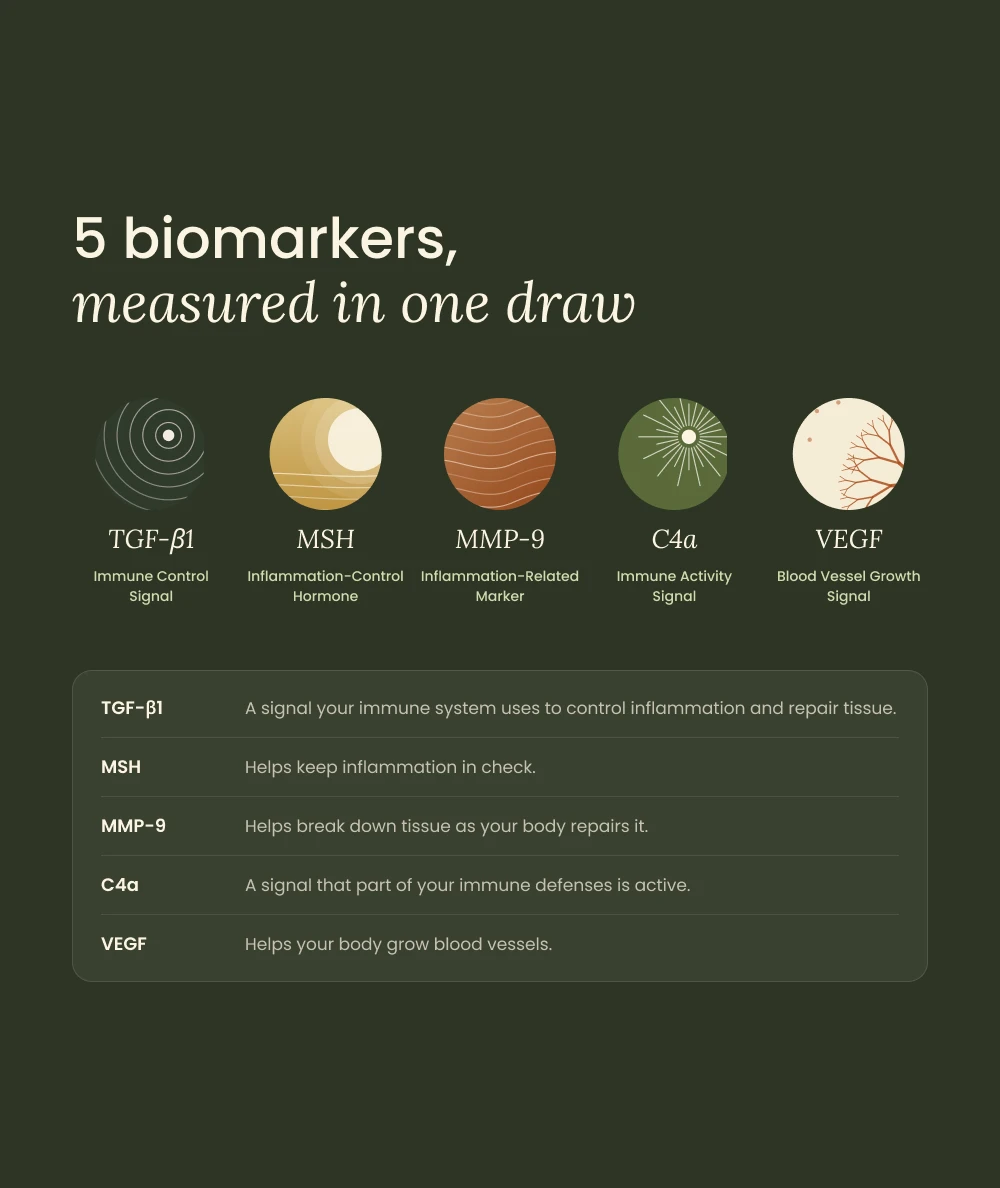
The five markers
 TGF-β1Immune Control SignalA signal your immune system uses to control inflammation and repair tissue.
 MSHInflammation-Control HormoneHelps keep inflammation in check.
 MMP-9Inflammation-Related MarkerHelps break down tissue as your body repairs it.
 C4aImmune Activity SignalA signal that part of your immune defenses is active.
 VEGFBlood Vessel Growth SignalHelps your body grow blood vessels.
Getting labs is easy. Knowing what it means is what matters.
A standard panel can tell you your bloodwork looks normal. It may not tell you whether inflammation linked to mold is part of the picture, or what to do next.
- Standard bloodwork
Standard bloodwork answers a different question.
A yearly panel checks blood counts, cholesterol and organ function. It doesn’t include the five markers studied in mold-related illness.
Usually part of a yearly check-up
What it covers: blood counts, cholesterol and organ function.
- Mold allergy tests
An allergy test answers a different question.
It looks for an allergic response to mold – the kind behind sneezing, itchy eyes or wheezing. It doesn’t assess the broader inflammation pattern described in CIRS research.
Ordered through your doctor or an allergist
Different question: an allergic response, not these five markers.
- Urine mycotoxin tests
A urine test answers a different question.
It measures certain mold toxins leaving your body, and food can also be a source. It doesn’t measure your immune or hormone response.
Usually a single urine sample
The problem: a toxin in your urine doesn’t show how your body is responding.
Your lab results, explained.
5 markers provided with plain-English explanation and clear next steps.
You’ll learn
- 1What your results could meanGet a straightforward overview of your biomarker blood test to bring to your clinician about possible mold exposure.
- 2What your markers measureSee how the report organizes your results around inflammation, immune activity, and hormone signaling.
- 3Where each marker fallsCompare TGF-β1, MSH, MMP-9, C4a, and VEGF with the report’s reference ranges to see what’s high, low, or in range.
- 4What to consider nextMake a more informed next move: discuss your results, explore MoldCo Care, or decide whether to investigate mold at home.
Get your own results in 2–3 weeks
- All five markers in one Labcorp draw
- Drawn at any of 2,000+ Labcorp locations
- HSA/FSA eligible, no separate lab bill
Not sure yet? Check your free Mold Risk Score
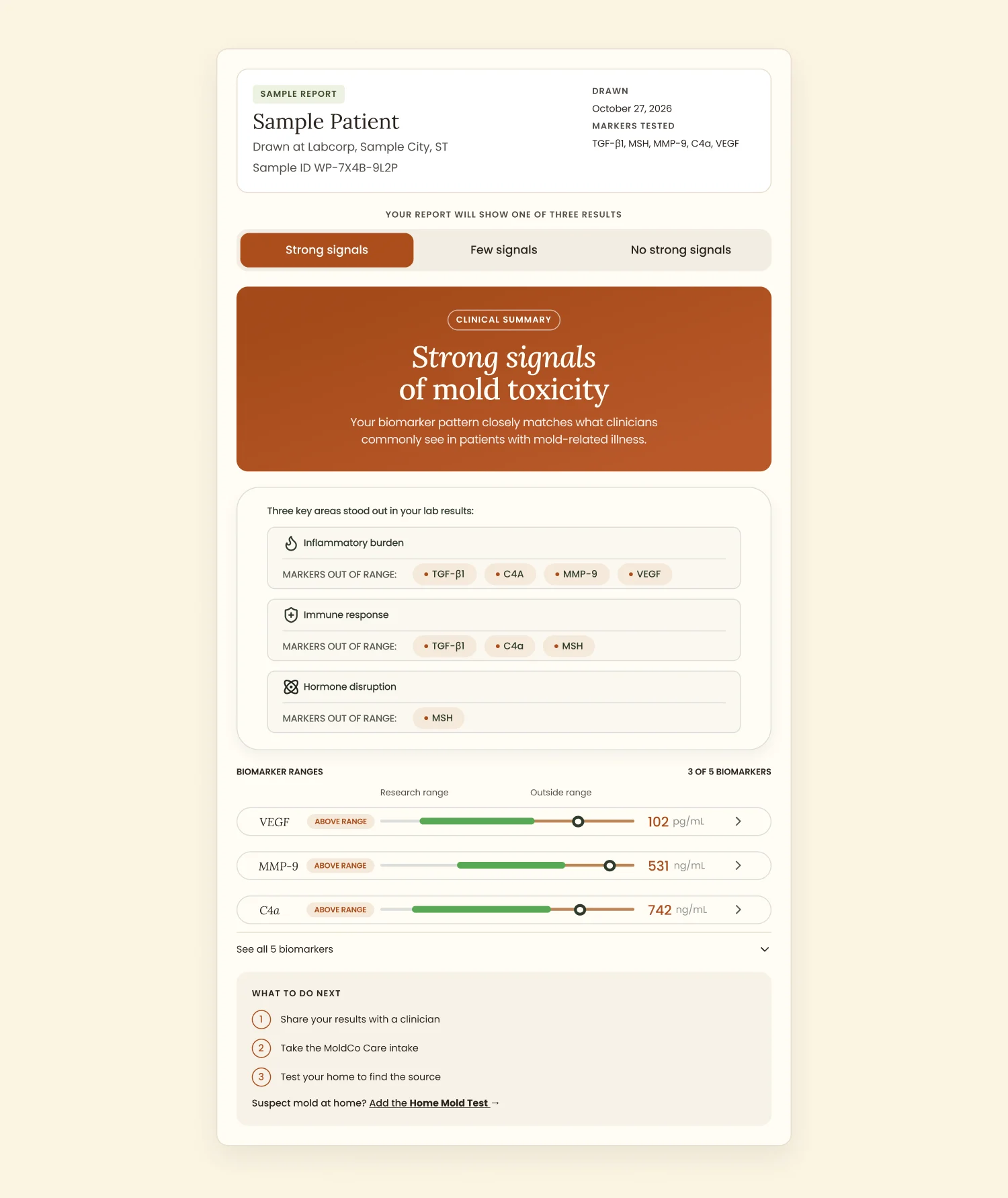
Sample Patient
Drawn at Labcorp, Sample City, ST
Sample ID WP-7X4B-9L2P
- Drawn
- October 27, 2026
- Markers tested
- TGF-β1, MSH, MMP-9, C4a, VEGF
Your report will show one of three results
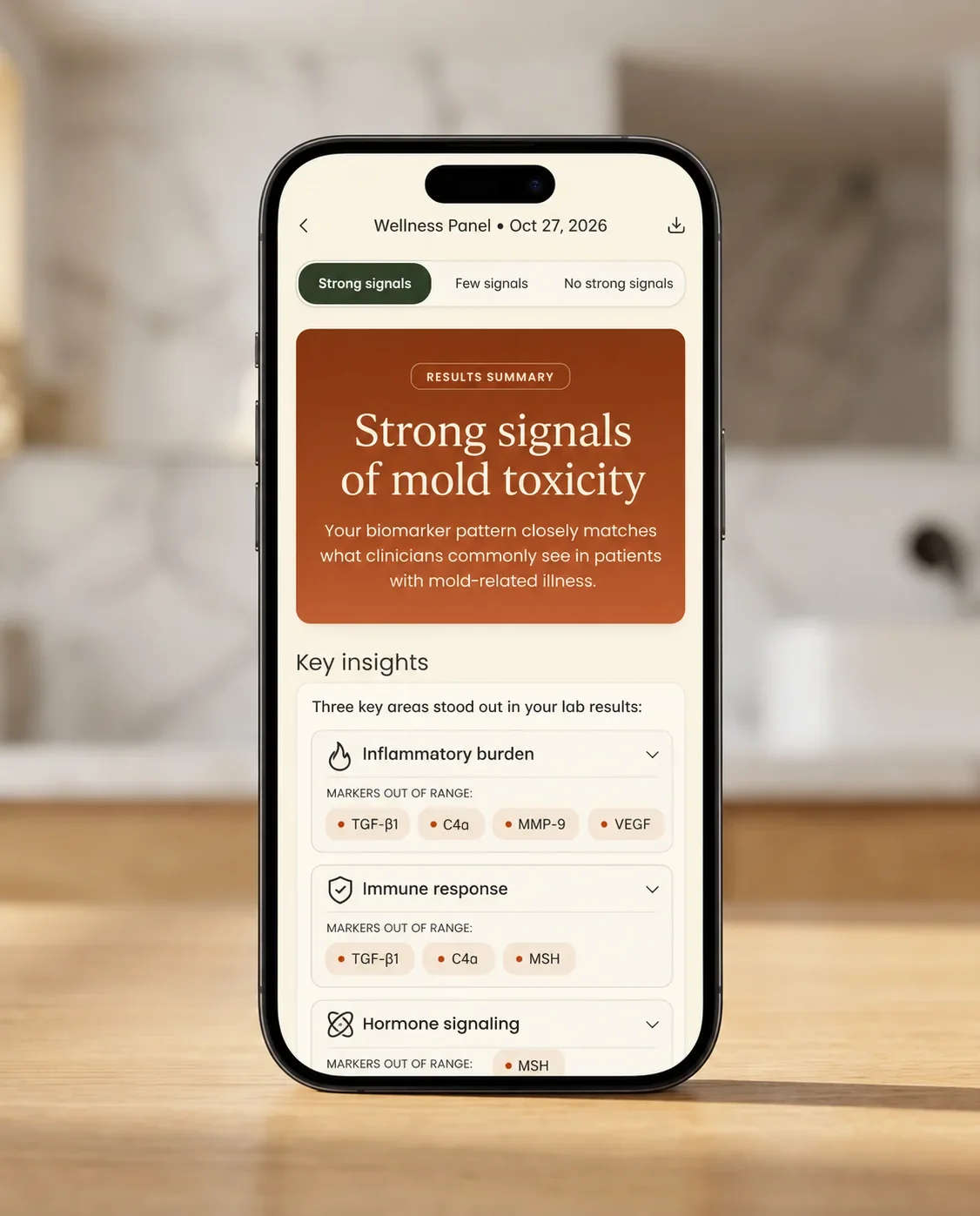
Strong signals of mold toxicity
Your biomarker pattern closely matches what clinicians commonly see in patients with mold-related illness.
Three key areas stood out in your lab results:
- Inflammatory burdenMarkers out of range:TGF-β1C4aMMP-9VEGF
- Immune responseMarkers out of range:TGF-β1C4aMSH
- Hormone signalingMarkers out of range:MSH
See all 5 biomarkers
What to do next
- 1Share your results with a clinician
- 2Take the MoldCo Care intake
- 3Suspect mold at home? Explore Home Mold Testing
Your home tells part of the story. Your blood may tell the rest.
5
markers used in evaluations of mold-related illness, measured in a single draw
TGF-β1 · MSH · MMP-9 · C4a · VEGF
15 min
at a Labcorp near you. No kit to mail.
2,000+ locations
2–3 wks
to results, with every marker explained in plain English
Secure patient portal
Finally, a straight answer about your body.
 01
Order online
Pay once. Your lab order arrives by email. An independent clinician authorizes it.
 02
Visit a local Labcorp
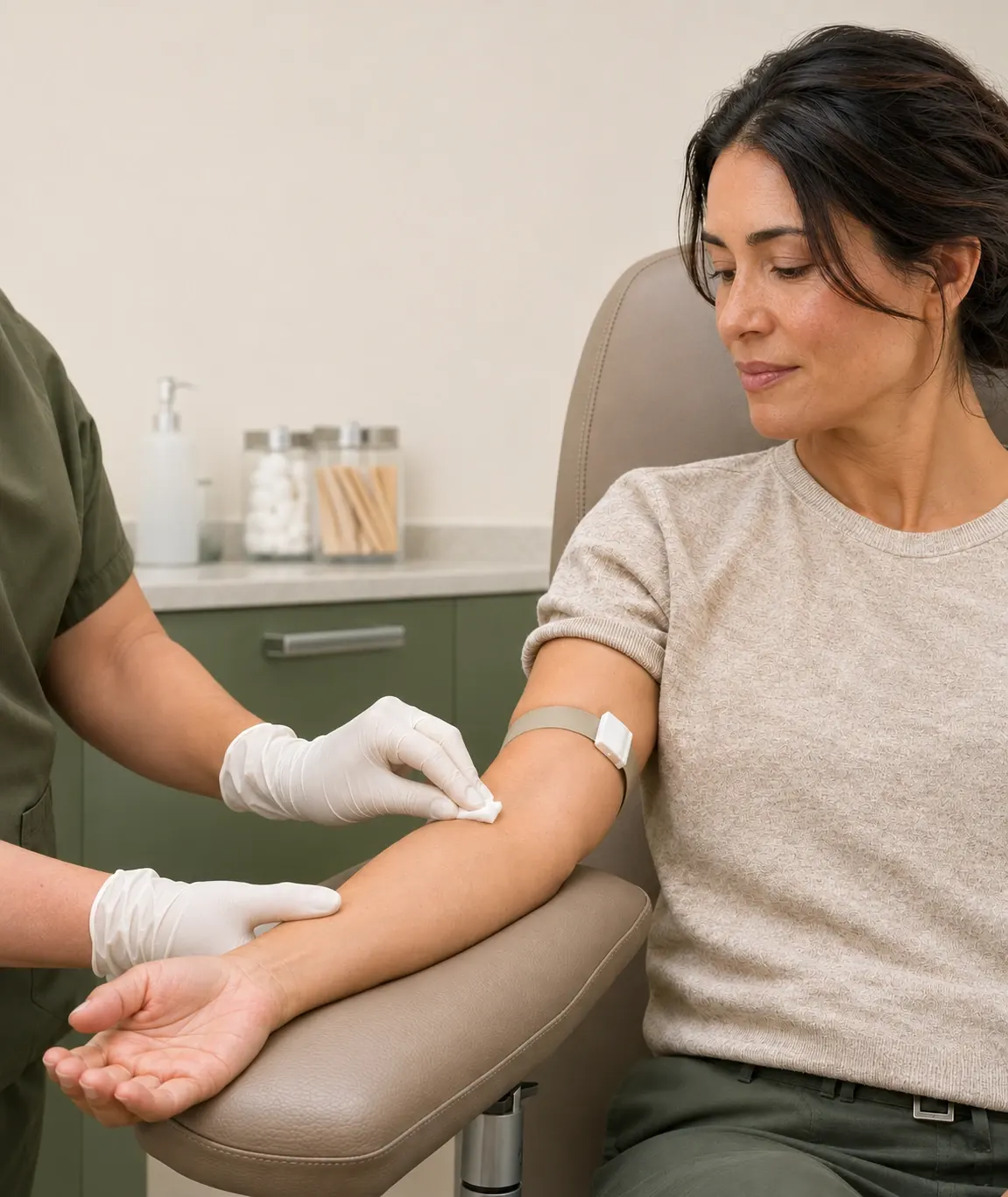
Any of 2,000+ locations. The draw takes about 15 minutes. No fasting needed.
 03
Get your results
All five markers in 2–3 weeks, each one explained, with next steps.
 04
Know your next step
In range? You’ll see what that means. Something’s off? See whether MoldCo Care fits.
Lab order emailed after checkout · HSA/FSA eligible
Trusted by experts, loved by customers.
Expert voices
Our clinical team
“The days of simply living with mold have been replaced.”
 Dr. Ritchie Shoemaker, MDFounding Physician, MoldCo
Trained at


Customer stories

“I suggest anyone with a mysterious illness consider that it could be mold, and start testing with MoldCo. It could save your life.”
Featured in
As seen in





The MoldCo protocol
From results to treatment
Prescription treatment in three phases, guided by a mold-trained provider and delivered to your door. Care is separate from the Wellness Panel.
Explore MoldCo CarePrescription treatments require a consultation with a licensed provider.†Off-label use. Colesevelam is FDA-approved, along with diet and exercise, to lower LDL cholesterol for some people and to help control blood sugar in adults with type 2 diabetes. For more information about off-label medication, click here. ‡Manufactured medication, not FDA-approved. EDTA is a nasal spray. *Compounded medication, not FDA-approved. VIP (vasoactive intestinal peptide) is a nasal spray.



The Wellness Panel, answered.
The Wellness Panel is for people who suspect mold exposure and want to see whether their body shows signs of the inflammation studied in mold-related illness. That often means ongoing symptoms that routine bloodwork hasn’t explained, mold found at home or work, or wanting real data before seeing a mold-trained clinician. It isn’t a general health check-up or an allergy test, and it doesn’t diagnose any condition. Not sure yet? Our free Mold Risk Score is a good place to start.
No single blood test can prove that mold is making you sick. What the Wellness Panel can do is measure five markers (TGF-β1, MSH, MMP-9, C4a and VEGF) used in evaluations of mold-related illness to look at inflammation and immune activity. These markers aren’t specific to mold, so your results are a starting point, not a diagnosis. Combined with your symptoms, your history and what you find in your home, they can help you and a clinician decide what to look into next.
Each marker reflects a different part of your immune and inflammatory response. TGF-β1 helps control inflammation and tissue repair. MSH is a hormone that helps keep inflammation in check. MMP-9 helps break down tissue as your body repairs it. C4a is a signal that part of your immune defenses is active. VEGF helps your body grow blood vessels. Your report compares each result with reference ranges used in CIRS medicine, which can differ from a standard lab’s “normal” range. Those ranges are a reference point for a conversation with a clinician, not a diagnostic cutoff.
No, each one answers a different question. A mold allergy test looks for antibodies to mold spores and tells you whether you’re allergic. A urine mycotoxin test measures substances leaving your body, and food can also be a source. It doesn’t measure your immune or hormone response. The Wellness Panel measures something else: how your immune and inflammatory systems are responding, using five blood markers studied in mold-related illness.
You don’t need to see a doctor first. After checkout, an independent licensed clinician authorizes your lab order, which Labcorp requires before a blood draw. That authorization isn’t a review of your health history or your results. When your results arrive, about 2–3 weeks after your draw, every marker is explained in plain English with a suggested next step, but no clinician reviews your individual report. For a professional opinion, bring the report to your clinician or take the MoldCo Care intake.
The $499 covers the full test: your lab order, the blood draw at any of 2,000+ Labcorp locations, testing of all five markers, and your results in your secure patient portal with every marker explained. There’s no separate Labcorp bill. The Wellness Panel is HSA/FSA eligible, though eligibility can depend on your plan, so check with your plan administrator if you’re unsure. Not included: a clinician reviewing your individual results, and MoldCo Care, which is a separate treatment program.
Either way, your report explains what each result could mean and suggests a next step. Your report shows which marker is high or low and explains its role. Review the results alongside your symptoms and exposure history with a clinician familiar with mold-related illness: share your report, take the MoldCo Care intake, or, if you suspect mold at home, explore home testing. It doesn’t mean mold is definitely the cause. If every marker is in range, all five results fall within the reference ranges, but that alone can’t rule out a mold-related problem. Your symptoms still matter.
CIRS stands for Chronic Inflammatory Response Syndrome. The CIRS model proposes that mold and other biotoxin exposures can leave the body’s inflammatory response active after the initial trigger, including exposures in water-damaged buildings, as described in research led by Dr. Ritchie Shoemaker, MoldCo’s founding physician. The five markers in the Wellness Panel are among the blood tests used in that research. The panel doesn’t diagnose CIRS. That takes a full evaluation by a trained clinician, which looks at your symptoms, history and exposure along with labs. Your results can be part of that conversation.
Go deeper:What is CIRS?Mold illness symptomsMold exposure and inflammationHow to test your home for mold
Know what your markers say.
Results in 2–3 weeks from your draw
Lab order emailed after checkout · HSA/FSA Eligible

The results of this lab panel do not include clinician oversight and should not be used to make a diagnosis or health claim without consulting your licensed healthcare provider. The information and guidance provided herein is not a substitute for professional medical advice, diagnosis, or treatment. These markers are not specific to mold-related illness. They can be abnormal for many other reasons and only a licensed healthcare provider can provide medical guidance. The purpose of this panel is to obtain measurements of blood biomarkers associated with Mold Toxicity or CIRS, as described in the medical and scientific literature, and which reflect clinical practice by certain mold-certified clinicians.
†Off-label use. Colesevelam is FDA-approved, along with diet and exercise, to lower LDL cholesterol for some people and to help control blood sugar in adults with type 2 diabetes. For more information about off-label medication, click here.
‡Manufactured medication, not FDA-approved. EDTA is a nasal spray.
*Compounded medication, not FDA-approved. VIP (vasoactive intestinal peptide) is a nasal spray.
Disclaimer
Medical care is provided by licensed care providers. MoldCo provides technology and administrative services and does not practice medicine.
The information provided on this site is not intended as a substitute for professional medical advice, diagnosis, or treatment.
Any health-related claims made on this site have not been evaluated by the Food and Drug Administration (FDA). Some medicines are FDA-approved for other conditions and prescribed “off-label” for mold-related conditions. Each product page states its FDA status.
Results vary. No clinician or company can promise that treatment will improve your symptoms. Seek evaluation and treatment from your healthcare providers.
MoldCo services are not for emergencies. If you think you have a medical emergency, call 911 or go to the nearest emergency room.