4 Things Most Doctors Won't Tell You About Mold

Contents
For years you've felt tired, foggy, and not quite yourself, and every test comes back fine. You're not imagining it. MoldCo is America's leading mold-specialized clinic, and we hear this story every day. Here are four things we wish more people knew sooner.
1. Feeling foggy for years usually isn't "just in your head"
People come to us after years of being told it's stress, anxiety, or just getting older. Some were quietly made to feel it was all in their head, until they half-believed it.
Part of why it goes unsolved: the symptoms don't look connected. The exhaustion, the brain fog, the aches that move around your body get treated as separate problems, by separate doctors, until you see they're one pattern.
Your symptoms are real, common, and remarkably consistent. The word that won't come mid-sentence. Reading the same paragraph three times. Tired in a way sleep can't fix. In research on mold-related illness, fatigue shows up in around 9 in 10 people, and memory or word trouble is nearly as common.
2. Your home can affect you, even if it looks and smells clean
Mold doesn't have to be visible to affect you. It hides behind walls, under sinks, and inside HVAC systems, and about half of U.S. homes have had the water damage mold needs.
Two people can share the same clean house and feel completely different. About 1 in 4 of us (roughly 24%) are genetically slower to clear these toxins. The exposure that barely touches your partner can wear you down for years.
Know what's in your home
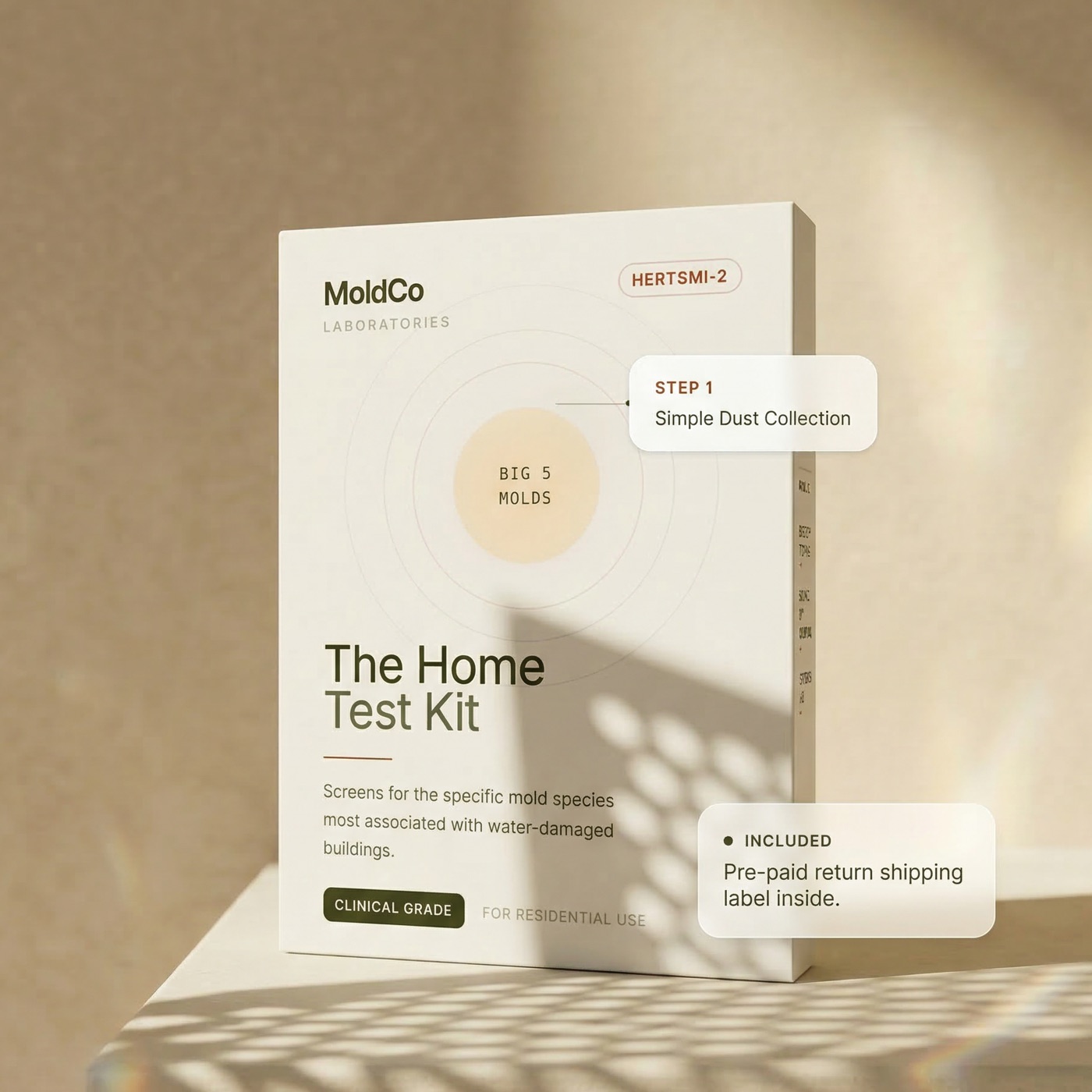
A simple dust test checks your space for the water-damage mold that makes people sick, no inspector needed.
3. A standard checkup usually doesn't look for this
Most doctors are doing their best inside a fifteen-minute visit. But the markers tied to mold-related illness aren't on a routine physical or a standard blood panel.
So your bloodwork keeps coming back "normal," because no one was looking for this. That's the quiet gap that costs people years.
4. You can get the data yourself, without guessing
MoldCo's Wellness Panel measures five biomarkers through LabCorp: C4a, MSH, TGF-beta1, MMP-9, and VEGF. These results can add information to a clinical evaluation.
Bring the results to a clinician. The panel does not diagnose mold-related illness on its own. Normal and abnormal findings both need to be considered alongside symptoms, medical history, exposure context, and other possible causes.
You're already paying for this. Every foggy afternoon, every plan you cancel, every appointment that ends in a shrug. Another year of not knowing costs far more than the test.
Stop guessing. Get real numbers.
Check five biomarkers tied to mold toxicity, from one quick Labcorp draw.
$499 · HSA/FSA eligible · No doctor visit needed

Sources: genetic susceptibility ~24% (Shoemaker et al., 2006); ~half of U.S. homes with dampness or water damage (Spengler; EPA); symptom prevalence and biomarker findings from published research on mold-related illness (Shoemaker & House). This article is informational and is not medical advice. MoldCo treats but does not diagnose CIRS.