Testing Guide
Does Bleach Kill Mold? Ask Whether It Removed the Problem
MoldCo Editorial Team
The short answer
Contents
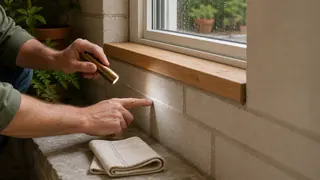
You spray the ceiling drywall near an AC unit. You scrub. The dark stain fades a little, or maybe it does not. Then the spot comes back, the room still smells musty, or you realize the material stayed damp the whole time.
So, does bleach kill mold? It can affect visible surface mold in limited cases. But the EPA does not recommend chemical biocides such as chlorine bleach as routine mold cleanup, and it makes a sharper point: killing mold is not the same as removing mold contamination.
That is the useful answer. Bleach may change what you can see. It cannot tell you whether the moisture source was fixed, whether porous material stayed contaminated, whether mold is hidden behind the surface, whether residue remains, or whether the space is safe enough for a sensitive person to re-enter.
The cleaner is not the main variable
Mold grows when moisture lets it grow. If the surface keeps getting wet, the cleaner is not the main variable.
EPA's basic cleanup guidance starts with moisture control, hard-surface cleaning with detergent and water, complete drying, and porous-material limits. That is a different frame from "spray until the stain looks better."
A small spot on a hard, nonporous surface is one kind of problem. Drywall, ceiling tile, insulation, carpet, wood that stayed damp, or material inside a wall cavity is another. EPA says absorbent or porous moldy materials may have to be discarded because mold can be difficult or impossible to remove completely from their spaces and crevices.
That is why bleach can feel like progress and still leave the problem unresolved. The visible patch may be on the surface, but the reason it grew may be behind the surface: a leak, condensation, a failed bathroom fan, HVAC moisture, or damp building material that never dried.
Why mold comes back after bleach
Recurring mold is usually not a sign that you needed a stronger chemical. It is a sign that the material, water source, ventilation, or hidden growth may still be unresolved.
EPA's homeowner guide says the key to mold control is moisture control, and that if you clean up mold but do not fix the water problem, the mold problem will most likely come back. That single sentence is more useful than most bleach arguments.
Black color does not change the decision rule. A dark patch should not be ignored, but color alone should not decide danger, species, cleanup method, or whether symptoms are caused by that spot. CDC/NIOSH frames indoor mold around moisture, visible growth, musty odor, repair, drying, and remediation practices, not around color panic.
Painting or caulking over moldy surfaces has the same weakness as bleach-only thinking. EPA says moldy surfaces should be cleaned and dried before painting or caulking. Covering the surface is not proof that the source was handled.
When spray-and-wipe thinking is too thin
A spray bottle and a cloth may be too little when the mold is larger, recurring, hidden, connected to water damage, tied to HVAC, or showing up around someone with asthma, immune suppression, mold allergy, or other medical vulnerability.
EPA's homeowner guidance recommends protective equipment and, for larger or contaminated jobs, trained professionals. For more detail on cleanup and remediation, see MoldCo's mold remediation guide.
MoldCo does not inspect or remediate homes. The role here is to keep the building question and the health question separate so a surface cleaner does not create false certainty.
Dead mold and residue still matter
One reason kill-only thinking is incomplete is that mold residue can still matter after organisms are no longer actively growing.
EPA's bleach guidance says dead mold may still cause allergic reactions in some people, so it is not enough simply to kill mold. It must also be removed. For mold-sensitive people, that caveat deserves a higher bar than "the stain changed."
Keep the claim narrow. This does not mean every bleach-cleaned surface is equally dangerous for every person. It means "dead," "lighter," and "safe enough for this person" are different claims.
What testing can add, and what it cannot prove
Recurring visible mold is different. In most cases, remove it and identify and correct the moisture source, usually through visual inspection, rather than sampling. EPA says sampling is generally unnecessary when visible mold growth is present. Because there are no federal limits for mold or mold spores, sampling cannot be used to check a building's compliance with federal mold standards.
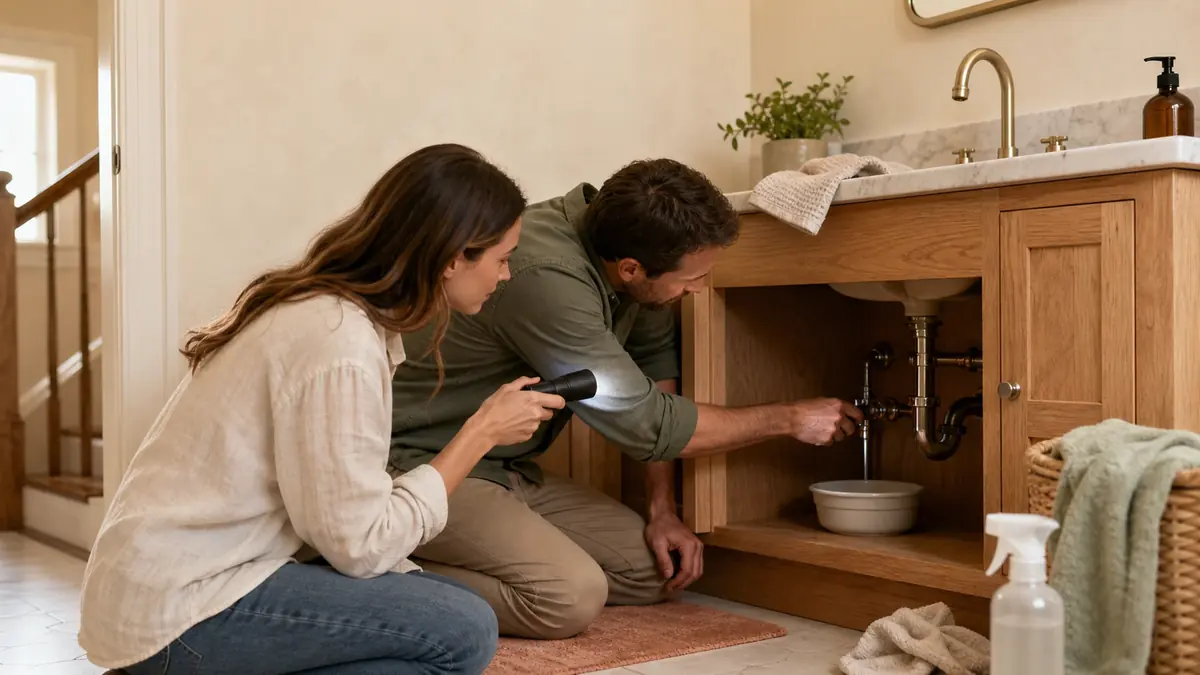
Testing can help when the question is still building-side and no mold is visible: possible hidden moisture, a musty smell without a visible source, or uncertainty after cleanup or remediation.
But no test should be used to say bleach made a home safe for a specific person. CDC/NIOSH says there are no health-based standards for mold or other biological agents in indoor air, and that short-term spore counts or culture results cannot be interpreted as health-risk measurements.
That is the narrow place where MoldCo's Mold Home Test Kit can make sense. It provides HERTSMI-2 settled-dust data for a building-side question when no mold is visible and the question involves possible hidden moisture, a musty smell without a visible source, or uncertainty after cleanup. It is not a bleach alternative, a remediation tool, an inspection replacement, a diagnosis, or proof that a home is safe.
If the bleach question is part of ongoing symptoms plus suspected exposure, keep that as a separate health question. MoldCo's Free Assessment can help organize whether mold is worth evaluating, but it does not diagnose illness or replace medical care.
A practical way to decide
Use bleach as a small part of the conversation, not the whole decision.
Ask what material was moldy, what kept it wet, whether the source was fixed, whether growth or odor returned, whether mold could be hidden, and whether anyone in the space needs a higher cleanup bar. If the answer points to a small hard surface and a fixed moisture source, the situation is different from drywall, carpet, HVAC, water damage, recurrence, or post-cleanup re-entry doubt.
Bleach can affect visible surface mold in limited cases. The better question is whether the mold problem was removed, dried, source-controlled, and understood well enough to choose the next step.
Any health-related claims made on this site have not been evaluated by the Food and Drug Administration (FDA). The information provided on this site is not intended as a substitute for professional medical advice, diagnosis, or treatment. Always seek the advice of your physician or other qualified health provider with any questions you may have regarding a medical condition. MoldCo assumes no responsibility or liability for any errors or omissions in the content of the references, nor for any actions taken in reliance thereon.
About the author

MoldCo Editorial Team
Editorial Team
The MoldCo Editorial Team maintains MoldCo's public education library. The team works from MoldCo's product, clinical, and environmental review standards to keep content clear, sourced, and within appropriate medical and remediation boundaries.
Your next step
Not sure whether mold is part of your picture?
The first step is an intake that maps your symptoms and history. You get clarity first, then decide whether provider-guided care fits.
This article is informational and is not medical advice. MoldCo treats but does not diagnose CIRS.