Science and Evidence
Mold and hair loss: start with the pattern
MoldCo Editorial Team
The short answer
Contents
A damp home can feel like the obvious explanation for a change this visible. A medical consensus report lists catagen hair loss among changes associated with elevated TGF-beta1, a cytokine/growth factor. That association gives a clinician another clue to consider; it doesn't establish that indoor dampness, mold exposure, or inhaled mycotoxins directly caused a particular hair-loss disorder. Damp buildings are linked to respiratory and allergic problems, while certain infections and eczema also appear in CDC/NIOSH guidance. That's a reason to take a building concern seriously. It isn't a reason to skip the hair pattern.
Start with what the hair is doing. Diffuse extra shedding, a part that has widened over time, and a patch that appeared suddenly are different patterns. The American Academy of Dermatology distinguishes excessive shedding from hair loss because they can follow different courses and call for different evaluation.
Some changes should move the appointment sooner. Seek prompt evaluation from a clinician or dermatologist if the loss is rapid or extensive, or if your scalp hurts, burns, itches intensely, looks red or scaly, or has sores or drainage.
Move promptly as well if you suspect scarring. Hair change beyond the scalp also belongs in prompt evaluation, whether it affects your eyebrows, eyelashes, or other body hair. These hair and scalp signs can narrow what needs attention, while suspected scarring or fast loss needs early dermatology care. An article can't tell you which condition is present.
The delay that confuses the story
A trigger and visible shedding don't always arrive together. After a major illness, surgery, childbirth, major weight change, or severe stress, extra shedding may become noticeable a few months later. That delayed shedding pattern is one possibility, not a diagnosis.
Now set two clocks side by side. The hair-cycle clock can point back to an illness or severe stress months earlier. The building or location clock records when you moved, worked somewhere, noticed dampness, or spent time away. Their dates may overlap without starting together.
Chronology preserves clues. It doesn't deliver a causal verdict.
Dampness still deserves action on its own terms. Persistent dampness and microbial growth are associated with important respiratory and allergy effects (World Health Organization). A damp building can need investigation and correction even when it can't answer the hair-loss question. The cause of the hair change remains open.
Two timelines for one appointment
Keep the records separate. Each one has a different job.
-
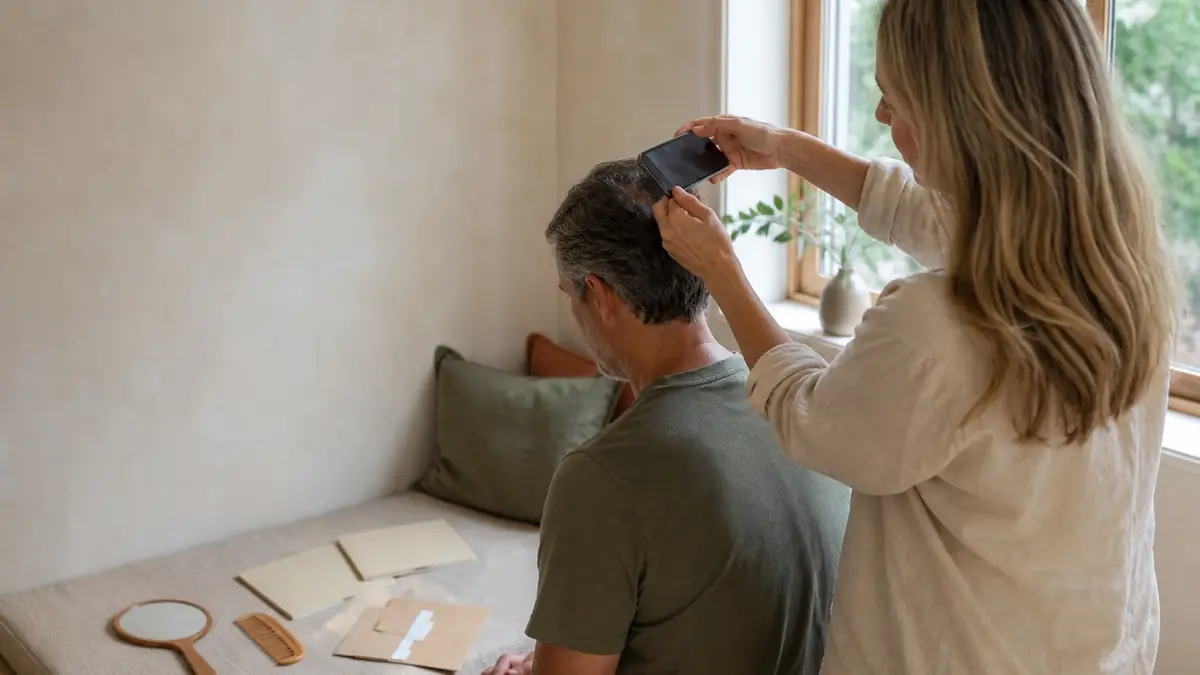
For the hair record, lead with pattern and pace. Note when the change began and whether it was sudden or gradual. Describe diffuse shedding or reduced density; a widening part; any distinct patches. Save dated photos in similar light. Record scalp signs and changes beyond the scalp. Add recent triggers: major illness or fever; surgery or childbirth; major weight change; severe stress. Finish with medication changes and hair practices from the preceding months.
-
For the building and location record, note move-in and move-out dates plus the other places where you regularly spend time, such as workplaces. Record visible dampness or leaks; musty odors; inspections; repairs; existing test reports. Add time away and the dates of any changes you observed without turning the observation into a causal conclusion.
Exact dates aren't required when you can't remember them. Use the month or season instead of inventing precision. Counting every lost strand is unnecessary. The useful record shows sequence, speed, and visible pattern.
These records are history, not a test. They can save appointment time otherwise spent untangling dates and preserve a real building concern without asking a property record to diagnose a medical problem.
What a useful hair-loss evaluation can change
A hair-loss evaluation starts with what changed and when it changed. The clinician looks closely at the scalp and nails, along with any other area showing hair loss.
That first look determines whether a gentle hair-pull assessment, targeted blood tests, or a scalp biopsy would add useful information. The evaluation depends on what the history and examination show; there's no single panel every person with hair loss needs.
A part widening over years, a sudden patch, and diffuse shedding after severe stress don't pose the same medical question. More than one process can also be present at the same time. The exam narrows the field before an emotionally compelling theory skips ahead.
Bring the actual reports from any bloodwork already done. A result described as "normal" still leaves the visible change to explain and doesn't make mold the default answer. Ask the clinician what presentation they see and how urgent it is. Then ask what each proposed test would help distinguish.
Environmental information answers a separate question. A building assessment may document moisture or mold conditions, but no health-based standard exists for indoor-air mold levels. Short air samples and spore counts also can't be interpreted as a measure of individual health risk. An environmental result can't diagnose the cause of your hair loss.
Repairing a moisture problem is building work. It isn't a hair-loss treatment. A medical evaluation can't settle what is happening inside a wall either.
The next useful move
Start by photographing the pattern and writing down when you first saw it. Book a clinical or dermatology visit, moving promptly for the warning signs above. Bring the separate building record when there's documented dampness or a clear location pattern.
You don't have to discard the mold concern to avoid overcalling it. Bring both timelines into the room. Let the visible pattern and exam guide the medical investigation while the building record preserves the separate question of what happened in the property.
Any health-related claims made on this site have not been evaluated by the Food and Drug Administration (FDA). The information provided on this site is not intended as a substitute for professional medical advice, diagnosis, or treatment. Always seek the advice of your physician or other qualified health provider with any questions you may have regarding a medical condition. MoldCo assumes no responsibility or liability for any errors or omissions in the content of the references, nor for any actions taken in reliance thereon.
About the author

MoldCo Editorial Team
Editorial Team
The MoldCo Editorial Team maintains MoldCo's public education library. The team works from MoldCo's product, clinical, and environmental review standards to keep content clear, sourced, and within appropriate medical and remediation boundaries.
Your next step
Not sure whether mold is part of your picture?
The first step is an intake that maps your symptoms and history. You get clarity first, then decide whether provider-guided care fits.
This article is informational and is not medical advice. MoldCo treats but does not diagnose CIRS.
Keep reading

Science and Evidence
GENIE Test for CIRS: Ask What the Result Would Change
August 16, 2026 · 6 min read

Science and Evidence
When CIRS-oriented treatment makes you feel worse: what to do next
August 15, 2026 · 6 min read

Science and Evidence
VIP Nasal Spray for CIRS: What the Evidence Can Actually Decide
August 14, 2026 · 6 min read