Causes and Exposure
5 Signs of Black Mold in Your House: What the Clues Can Tell You
MoldCo Editorial Team
The short answer
Contents
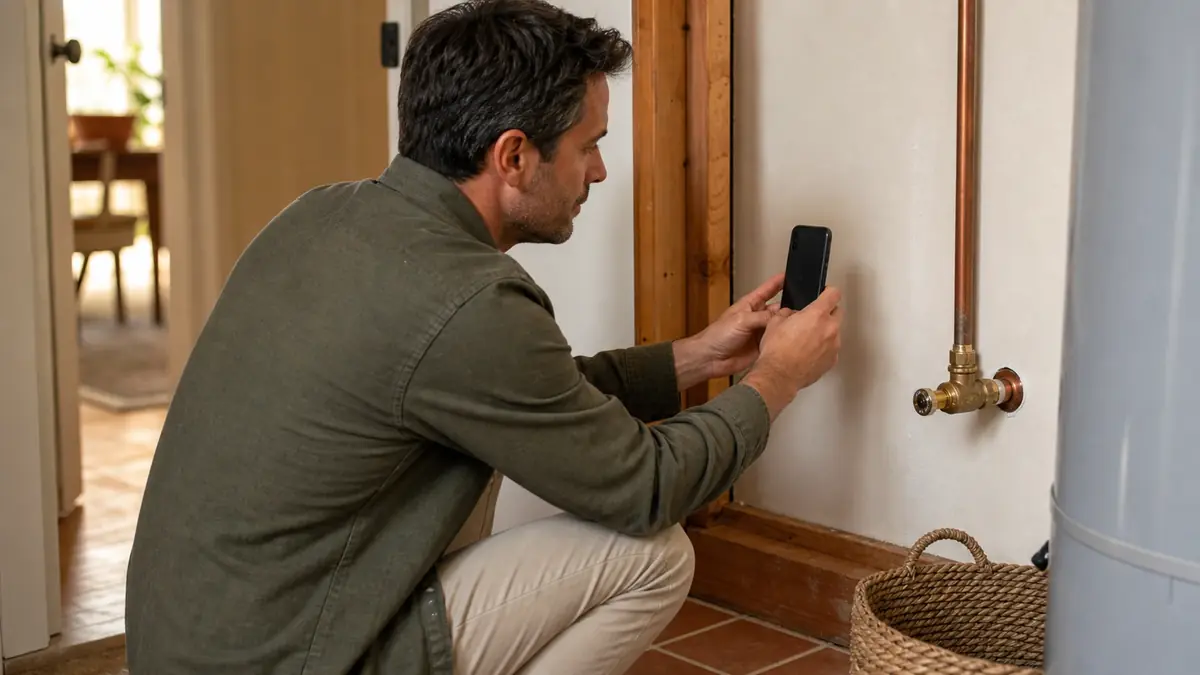
After a repaired water-heater leak and later wall spots, one homeowner asked what to look for to make sure the problem was resolved and the wall protected. That is one person's reported situation, not evidence of what was inside the wall. It does expose the problem with a color checklist.
No set of five household signs can identify Stachybotrys chartarum, prove "toxic black mold," or tell you how dangerous a home is. What those clues can do is show which part of the building problem still needs an answer.
A repair and a resolved problem are different judgments. The repair may close the leak or cover the mark. Resolution asks whether the water source is controlled, the affected material is dry and appropriately addressed, and the physical extent of the problem is understood.
Treat the five clues as a decision map, not a diagnostic score. A visible change gives you something to document in its water and material context. A persistent musty odor can widen the search. Leak, condensation or damage history sends you back to drying; actual return after a surface response calls for a dated comparison; and a hidden-space or HVAC concern needs a plausible physical link before it widens the scope. None can name a species or predict a person's health response.
Start with the moisture problem, not the color
Molds come in many colors. Dark color doesn't make growth more or less dangerous, and it can't identify a species, according to current NIOSH guidance. Stachybotrys chartarum is often described as greenish-black, but that description isn't an identification test. It grows on cellulose-rich materials such as gypsum board and paper when they stay wet, which is why the CDC description points back to constant moisture.
A visible change still matters. Spots, fuzzy growth, peeling paint, bubbling material or soft drywall give you a location and a material to document. They don't tell you whether the growth is Stachybotrys, whether a person is in danger, or how far the problem extends. The useful question is what water reached that material and whether it has stopped.
Stop counting how frightening the signs look. Count each clue by the building decision it changes.
Each clue earns a different next step
Begin with the water history. A roof or plumbing leak, repeated window condensation, a wet appliance area or a flood tells you where to check drying and material condition. Indoor mold growth points to a water or moisture problem, and cleanup without source correction often ends with the problem returning, as the EPA's homeowner guide explains. Go back to what got wet and ask whether it dried. The past event alone doesn't prove that every later stain is mold or that the repaired area stayed wet.
When a room smells musty but no source is visible, expand the search area. Look for a moisture path or possible hidden growth. The odor itself can't identify a species, locate an exact source or explain a symptom; the EPA's odor guidance draws that health boundary plainly.
Next, compare change over time. One renter described "dark spots bleeding through it" after paint, along with a musty room and a wall that still felt damp. That is a reported observation, not a diagnosis. EPA cleanup guidance warns against painting before cleanup and drying and notes that staining can remain after mold is removed.
Separate change from residue. Actual return means new spots, spread, renewed odor, dampness or continuing material change. An unchanged stain may be old discoloration. Compare dated photographs instead of memory. A changing record can show that a source, drying or material question remains open; neither record identifies black mold.
Repeated locations call for a wider trace. Similar marks around windows in several rooms justify checking what those windows share, such as condensation or water entry. They don't prove one cause across the house. A mark near a vent doesn't prove HVAC contamination either. Before widening the concern to the system, look for a physical link: a condensate problem, wet insulation, visible growth on a component or an odor tied to operation.
Hidden spaces are where restraint matters. Opening them can spread material into the air. The EPA's building-investigation course names the backs of drywall, wall cavities around pipes, carpet padding and ventilation liners among possible hidden locations. A plausible moisture path can justify an experienced investigation. Curiosity alone is not a reason to open a wall.
Your house doesn't need to name the mold before it can show you that the moisture-and-material problem is unfinished.
What to document and decide next
Start with what you can observe without guessing. Photograph the area in consistent light. Record dates, location, size, color, odor, dampness, damaged material, known water events and whether the mark is stable or changing. Renters and other occupants can report the record in writing even when they don't control the repair. The record doesn't diagnose the problem; it makes the next building conversation more concrete.
Then work in order. Address an active water source where you can do so safely. Find out which materials got wet and whether porous material may need a different response from a hard surface. Define the apparent extent before disturbing a hidden area. Extensive water damage, contaminated water, uncertain hidden scope or a credible HVAC connection are reasons to seek qualified, independent environmental or building help.
Sample only when the result will change a named decision. Visible growth usually doesn't need routine sampling. Short air samples are snapshots and can't be interpreted as personal health risk; there is also no federal acceptable-home quantity for mold. Those limits are laid out by NIOSH and the CDC's home-testing guidance. A sample can't certify that a home is safe.
Keep adjacent questions in their proper lanes. Use the appearance guide for what a picture can and can't show, the inspection guide for a deeper testing decision, and the removal guide for cleanup scope. If symptoms are part of the concern, keep a separate health record and discuss it with a qualified health professional. People respond differently to damp or moldy environments, as the CDC's overview makes clear, and house clues can't establish individual causation.
To answer the homeowner's question, look for evidence that the source is controlled, the affected material has been dried and addressed, and the suspected scope is no longer changing. Start today with one dated photograph and a note of the location, material and water history. That record is not a verdict. It is the first check on whether the repair and the house are telling the same story.
Medical information notice
Any health-related claims made on this site have not been evaluated by the Food and Drug Administration (FDA). The information provided on this site is not intended as a substitute for professional medical advice, diagnosis, or treatment. Always seek the advice of your physician or other qualified health provider with any questions you may have regarding a medical condition. MoldCo assumes no responsibility or liability for any errors or omissions in the content of the references, nor for any actions taken in reliance thereon.
About the author

MoldCo Editorial Team
Editorial Team
The MoldCo Editorial Team maintains MoldCo's public education library. The team works from MoldCo's product, clinical, and environmental review standards to keep content clear, sourced, and within appropriate medical and remediation boundaries.
Your next step
Not sure whether mold is part of your picture?
The first step is an intake that maps your symptoms and history. You get clarity first, then decide whether provider-guided care fits.
This article is informational and is not medical advice. MoldCo treats but does not diagnose CIRS.
Keep reading
Causes and Exposure
Do Air Purifiers Help With Mold? Name the Job First
August 1, 2026 · 7 min read
Causes and Exposure
Mold on Walls: What to Do When It Keeps Coming Back
July 29, 2026 · 6 min read

Causes and Exposure
Pink Mold: What It Is, How to Clean It, and When to Look Deeper
July 29, 2026 · 6 min read