Testing Guide
What Does Mold Smell Like? Use the Pattern, Not the Label
MoldCo Editorial Team

The short answer
Contents
"I cannot pinpoint where the smell is coming from for the life of me." A faint odor in one bedroom after rain is worth investigating as a pattern, not naming as a cause. Mold can smell musty, earthy, damp, or stale because growing molds can release odor-producing compounds into the air. But smell alone does not confirm mold or locate its source.
The useful evidence is not which adjective fits best. It's the pattern around the odor: when it appears, where it's strongest, how long it lasts, what happened with water, which materials changed, and whether it returns under the same conditions.
Why a mold smell is not a mold ID
When mold grows, it can release small compounds that evaporate and reach your nose. Researchers call them microbial volatile organic compounds, or mVOCs. The mix can change with the organism and its growing conditions, and many of the same compounds can also come from sources other than fungi. That is why fungal odor profiles vary and overlap.
That variability sets a firm boundary. A scent can't identify a species or show whether mycotoxins are being produced. It can't measure exposure dose, establish danger, or act as a severity scale.
Your nose can call attention to a building problem; it can't sign off on what that problem is.
A non-invasive way to check the pattern
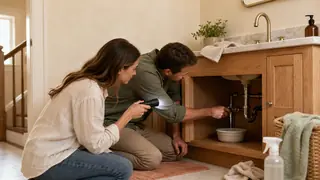
Start with observation, not demolition. The goal is to create a cleaner timeline if the odor persists without disturbing concealed material.
-
Record the timing before searching. Note the date and room. Record how long the odor lasts. Add what happened just before it appeared, such as rain, snowmelt, a plumbing event, showering, laundry, or HVAC operation. Write down whether it fades when conditions change and whether it returns.
-
Review the water history. Look back for known roof or plumbing leaks, overflows, condensation, damp carpet, window or door intrusion, or repairs in the affected area. A dry surface today doesn't erase a prior wetting event.
-
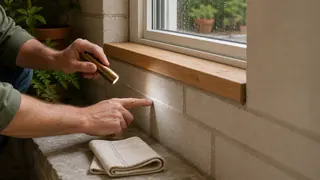
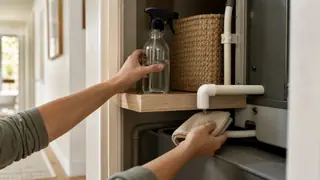
Observe materials from normally accessible areas. Stay in normal living areas. Do not lift carpet or open walls. Don't enter a crawlspace or take apart an air handler. Check accessible surfaces for staining, swelling, peeling finishes, warped trim, or recurring condensation. Photograph changes rather than disturbing them.
-
Map location without treating it as the source. Mark where the odor is strongest and whether a door position, fan, or HVAC cycle changes where it is noticed. A vent association is a routing clue, not an HVAC diagnosis.
-
Recheck the same conditions. One isolated odor is hard to interpret. A repeatable link to rain, a system cycle, or a particular room gives an investigator more useful information than a longer list of scent words.
A short air sample is a snapshot. A negative result may not represent what is happening in the building over time. For many damp-building investigations, a careful visual assessment plus musty-odor detection is more useful than routine short-term air sampling. That doesn't make every form of testing useless; it means the first question is about moisture and material damage, consistent with CDC/NIOSH guidance on mold testing.
When to stop searching on your own
Moisture and growth can hide behind drywall or paneling, above ceilings, beneath carpet and padding, inside pipe chases, in crawlspaces, or in ventilation components. That explains why an odor can persist without leading you to a visible source. It also explains why opening assemblies is a poor next step: investigating hidden mold may require experienced professional help because disturbing a concealed area can spread contaminated material through the building.
Stop the do-it-yourself search when the pattern returns despite repairs, the affected area appears extensive or inaccessible, the odor tracks HVAC cycles, or the history includes contaminated water. Those are points for qualified environmental help, not invitations to keep taking things apart. That complexity can change what a safe investigation requires, as reflected in EPA mold cleanup guidance.
MoldCo does not provide home inspections or remediation.
Once a source is established, lasting correction means controlling the moisture and appropriately cleaning or removing affected material. Deodorizing, painting over damage, or waiting for the smell to fade does not demonstrate that the source was corrected.
Not noticing an odor doesn't rule out concealed growth when water history or material damage points to a hidden problem. After cleanup, ask whether the moisture was corrected, affected material was removed, visible findings were resolved, and follow-up supports the work. Those are part of remediation evaluation criteria.
A better smell alone is not a safety certificate.
Only if the remaining question is whether settled dust can add limited context should a dust test enter the decision. MoldCo's Mold Home Test Kit provides HERTSMI-2 settled-dust information, but it doesn't identify the odor or locate its source, replace inspection or remediation, diagnose illness or measure personal exposure, or certify safety.
Any health-related claims made on this site have not been evaluated by the Food and Drug Administration (FDA). The information provided on this site is not intended as a substitute for professional medical advice, diagnosis, or treatment. Always seek the advice of your physician or other qualified health provider with any questions you may have regarding a medical condition.
About the author

MoldCo Editorial Team
Editorial Team
The MoldCo Editorial Team maintains MoldCo's public education library. The team works from MoldCo's product, clinical, and environmental review standards to keep content clear, sourced, and within appropriate medical and remediation boundaries.
Your next step
Not sure whether mold is part of your picture?
The first step is an intake that maps your symptoms and history. You get clarity first, then decide whether provider-guided care fits.
This article is informational and is not medical advice. MoldCo treats but does not diagnose CIRS.